Building
the electric
highway.
Charging infrastructure for the transition to electric long-distance transport.
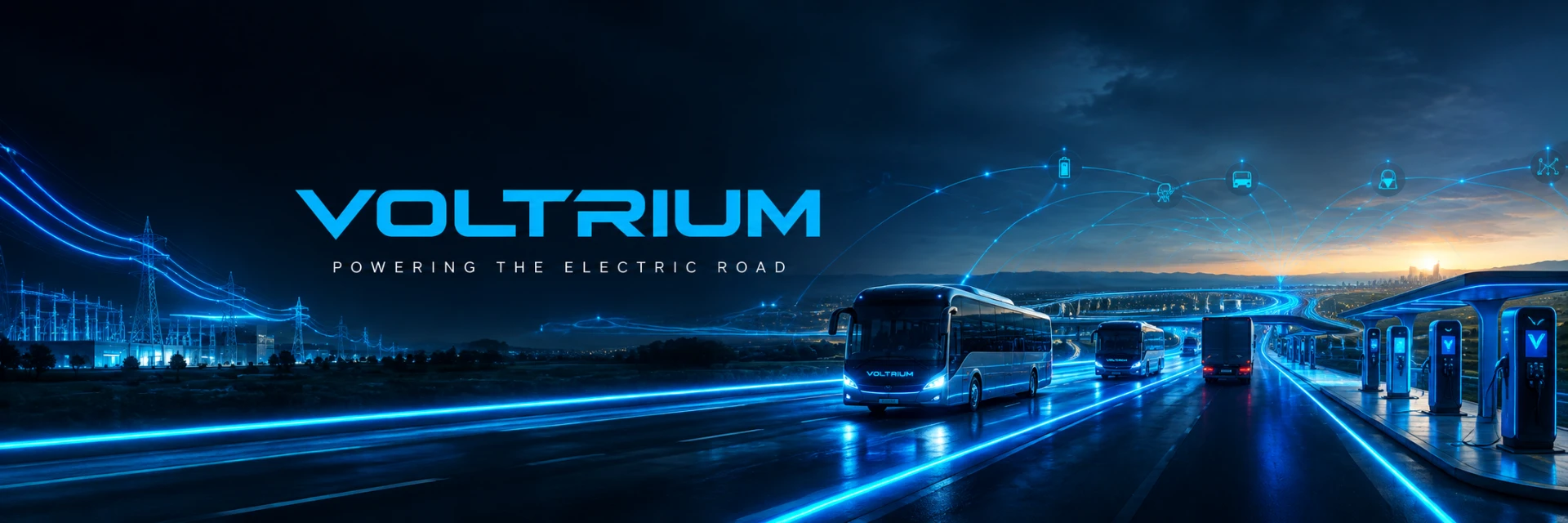
Electric buses can travel long distances. They need an infrastructure network that can travel with them. Voltrium develops and operates high-power charging infrastructure built around commercial routes.
The buses are becoming electric.
The roads are not.
The problem is not the bus. It is the infrastructure around the bus.
Electric coaches are increasingly viable for long-distance passenger transport. But a coach cannot electrify a route by itself. It requires reliable charging, known locations, grid capacity, uptime and a network designed around the route.
- Charging gap
- No high-power charging between the major stops.
- Range uncertainty
- Operators cannot plan energy along the route.
- Operational risk
- Downtime removes vehicles from service.
Today — infrastructure gap
With Voltrium — corridor network
Not a charger supplier.
A charging network operator.
Voltrium develops and operates the infrastructure required for electric commercial transport — taking responsibility for the system surrounding the charger.
Voltrium
Operating layer
01
Corridor planning
Identify where commercial vehicles need energy.
02
Site development
Secure and develop strategic charging locations.
03
Grid & energy
Design electrical infrastructure for high-power charging.
04
Charging
Deploy high-power DC charging infrastructure.
05
Uptime
Monitor availability, performance and reliability.
06
Operations
Maintain and operate the network.
07
Payments
Enable fleet accounts and commercial charging transactions.
08
Network expansion
Add charging capacity as electric fleets grow.
One integrated system · not eight separate services
The road becomes
the energy system.
The corridor itself becomes part of the vehicle's energy system.
Voltrium designs the charging network around the actual operating route — not around a parking bay.
01
Nairobi
02
Departure hub
03
High-power DC
04
Corridor
05
Charging hub
06
Destination
07
Depot / turnaround
08
Return journey
Variables Voltrium designs around
More than a charger.
Each Voltrium hub is a mini energy infrastructure system — layered, modular and designed to expand alongside fleet demand.
Hub schematic
Grid → storage → charging → vehicle. Digital layer sits above the physical system.
Grid
Utility connection
Transformer / switchgear
Protection & distribution
BESS
Battery energy storage
Solar
Optional local generation
DC fast charger
High-power, fleet-grade
Electric coach
Commercial use case
Digital control
Monitoring & dispatch
Payment / fleet account
Commercial transactions
Power the corridor.
Solar, battery storage and the grid combine into a resilient energy loop.
The objective is reliable energy at commercially viable cost per kilometre.
The role of BESS
Start with the routes
that matter.
Voltrium will initially focus on Kenya's major long-distance passenger corridors, beginning with Nairobi–Mombasa.
Initial corridor
Nairobi ↔ Mombasa
Commercial validation pending
Network expansion
- Nairobi ↔ Nakuru ↔ Eldoret
- Nairobi ↔ Kisumu
- Nairobi ↔ Malaba ↔ Kampala
- Nairobi ↔ Namanga ↔ Arusha
Illustrative · subject to validation
Buy mobility.
Don't build the energy system.
Voltrium absorbs the infrastructure complexity, so the operator doesn't have to become a charging, energy or battery company.
Traditional model
Operator
- Fuel
- Maintenance
- Infrastructure capex
- Energy risk
Electric + Voltrium
Operator
- Passenger service
- Routes
- Schedules
- Fleet operations
Voltrium
- Charging
- Energy interface
- Uptime
- Network
Partners
- OEM
- Finance
- Insurance
- Technology
The operator moves passengers. Voltrium keeps the energy infrastructure working.
One corridor.
Then an electric highway.
Target scale logic · not existing network
01
Prove
One operator. One corridor. Real operating data.
02
Connect
Hubs added along the first proven route.
03
Scale
Multiple corridors. Multiple operators. Dedicated energy systems.
04
Network
Kenya-wide commercial network.
05
East Africa
Kenya. Uganda. Tanzania.
The network becomes the electric highway.
Powering the transition is more than charging.
Electric commercial transport requires vehicles, batteries, charging infrastructure, energy and capital to work together.
Voltrium's model can support financing structures that align infrastructure, vehicle and energy costs with productive fleet use.
Bus
Battery
Charging
Energy
The electric highway
starts here.
Build the charging network.
Power the corridor.
Move East Africa.
AI partnership advisor
Describe your organization and goals. We'll suggest a relevant partnership track and draft your inquiry.